

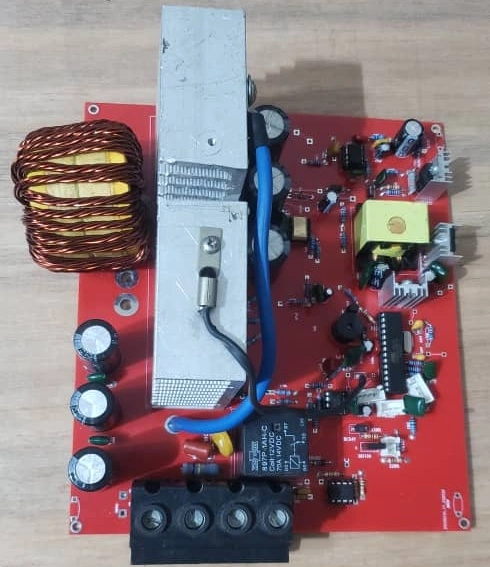


12/24V @ 60A MPPT CHARGER CONTROLLER, SOLAR UPTO 125V
Share :
This controller is designed to efficiently convert high-voltage solar input into regulated charging current for various battery systems, ensuring maximum power harvesting under all environmental conditions.
Solar Input Voltage (VOC Max): The unit shall accept a maximum open-circuit solar voltage of up to 125VDC.
Maximum Solar Power Input: The maximum rated solar input power will be defined by the selected model size (e.g., 12V/720W, 24V/1440W), scalable across the battery voltage range.
Nominal Battery Voltage: The controller capable of supporting a wide range of nominal battery voltages, including: 12V, 24V DC systems.
Maximum Charging Current (Rated): The controller's maximum sustained charging output current will be defined by the model rating (e.g., 40A, 60A, 80A), delivered across the supported battery voltage range.
Charging Topology: The unit shall utilize a highly efficient buck converter architecture to perform MPPT power conversion.
The core function is the MPPT algorithm, which operate with high dynamic efficiency to track the solar array's maximum power point rapidly and accurately.
MPPT Tracking Efficiency: The MPPT tracking efficiency is greater than 96%.
Charging Stages: The charging process implements a multi-stage approach for optimal battery health and longevity: Bulk, Absorption, Float, and Equalization (where applicable by battery type).
Battery Type Selection: The user can select the battery chemistry and charging profile, including but not limited to:
Sealed Lead Acid (SLA)
Gel
Flooded
Lithium Iron Phosphate (LiFePO4)
User-defined custom profile in customized version.
The controller is integrated with a 2004 LCD display and a dedicated keypad interface for monitoring, setup, and configuration.
3.1 Keypad Settings Menu Features
The keypad navigation system shall allow the user to fully configure the following parameters:
Battery Voltage Mode Selection: Manual selection of nominal battery voltage (12V, 24V). The controller does not rely on auto-detection.
Battery Type Configuration: Selection of the charging profile corresponding to the installed battery chemistry.
Maximum Charging Current Limit: The user can set a maximum and minimum current threshold to protect smaller or older batteries from excessive charging current.
Solar Voltage Adjustment (Vpp): Fine-tuning the voltage parameter for the MPPT algorithm to optimize performance for specific arrays.
Battery Voltage Adjustment: Fine-tuning the battery voltage for precise and accurate reading to compensate for copper loss in cable used for installations.
Display Backlight Control: User-configurable timeout for the display backlight from 30secs to 4mins.
Communication Configuration: Detailed settings for the serial communication port (see Section 4).
The LCD continuously display critical system metrics:
Real-time Battery Voltage (V)
Solar Array Voltage (V)
Charging Current (A)
Power Output (W)
Cumulative Energy Harvested (kWh)
Charging battery bar logo
Physical Interface: User can get all the display data via USB to TTL converter or dongle.
Baud Rate Selection: The user can select the serial communication speed via the keypad, supporting standard rates (e.g., 9600, 19200, 38400 up to 115200).
Serial Enable/Disable: A setting provided to enable or disable the serial communication port to conserve power or prevent unauthorized access.
Robust protection mechanisms built into the system for the longevity of the controller, battery, and solar array.
Solar Reverse Polarity Protection: The controller is fully protected against damage if the solar array is connected with reverse polarity to the input terminals.
Over Current Protection OCP: Charging current is actively limited to the user-set maximum value. If an internal fault causes excessive current, the charging path will be disconnected immediately via Relay.
Battery Under Voltage Protection (UVP): Charging shall cease if the battery voltage drops below a preset low limit to prevent deep discharge damage.
Battery Over Voltage Protection (OVP): Charging cease immediately if the battery voltage exceeds the configured absorption or float voltage limits to prevent overcharging.
Battery Breaker Trip Control: The controller shall provide a dedicated TTL or logic signal output to trigger an external battery disconnect breaker contactor in response to critical faults, such as OVP, extreme OCP, or high temperature.
Over Temperature Protection OTP: Internal temperature monitoring cease charging current if the heat sink or internal components reach a dangerous operating temperature.
Short Circuit Protection: The is protected against short circuits on the battery output terminals.