

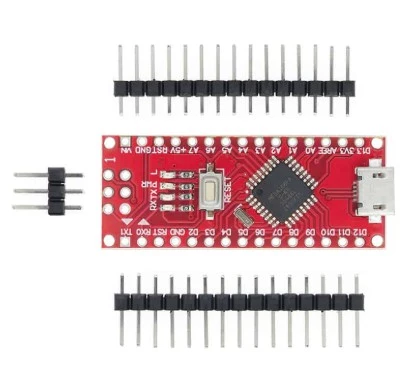
ARDUINO NANO ATMEGA168P
Share :
The Arduino Nano is a small, complete, and breadboard-friendly microcontroller board. The version you are referencing, the Arduino Nano ATmega168P, is an older revision (sometimes referred to as Nano 2.x) that uses the ATmega168P microcontroller instead of the more common ATmega328P found in the Nano 3.0.
Here are the key specifications for the Arduino Nano board with the ATmega168P:
| Feature | Specification (ATmega168P) |
| Microcontroller | ATmega168P |
| Clock Speed | 16 MHz |
| Operating Voltage | 5V |
| Digital I/O Pins | 14 (6 of which are PWM outputs) |
| Analog Input Pins | 8 |
| Flash Memory | 16 KB (2 KB used by bootloader) |
| SRAM | 1 KB |
| EEPROM | 512 bytes |
| Dimensions | 0.73" x 1.70" (approx. 18.5mm x 43mm) |
| USB Connector | Mini-B USB |
| Input Voltage (Recommended) | 7-12 V (via VIN pin) |
The main difference between the Nano with the ATmega168P and the more common Nano 3.0 with the ATmega328P lies in the memory capacity:
| Feature | ATmega168P | ATmega328P |
| Flash Memory | 16 KB | 32 KB |
| SRAM | 1 KB | 2 KB |
| EEPROM | 512 Bytes | 1 KB |
In terms of physical pins and clock speed, they are largely the same, but the ATmega328P provides double the memory, allowing for larger and more complex programs.
When using the Arduino IDE to program a Nano with an ATmega168P, you must select the correct board type, often listed as "Arduino Diecimila, Duemilanove, or Nano w/ ATmega168" or a similar option, to ensure the sketch is compiled for the correct amount of flash and RAM.